What you can make with Be Fulfilled: garments, fabrics and where your logo can go
By John Brown, Founder & CEO, Be Fulfilled ·
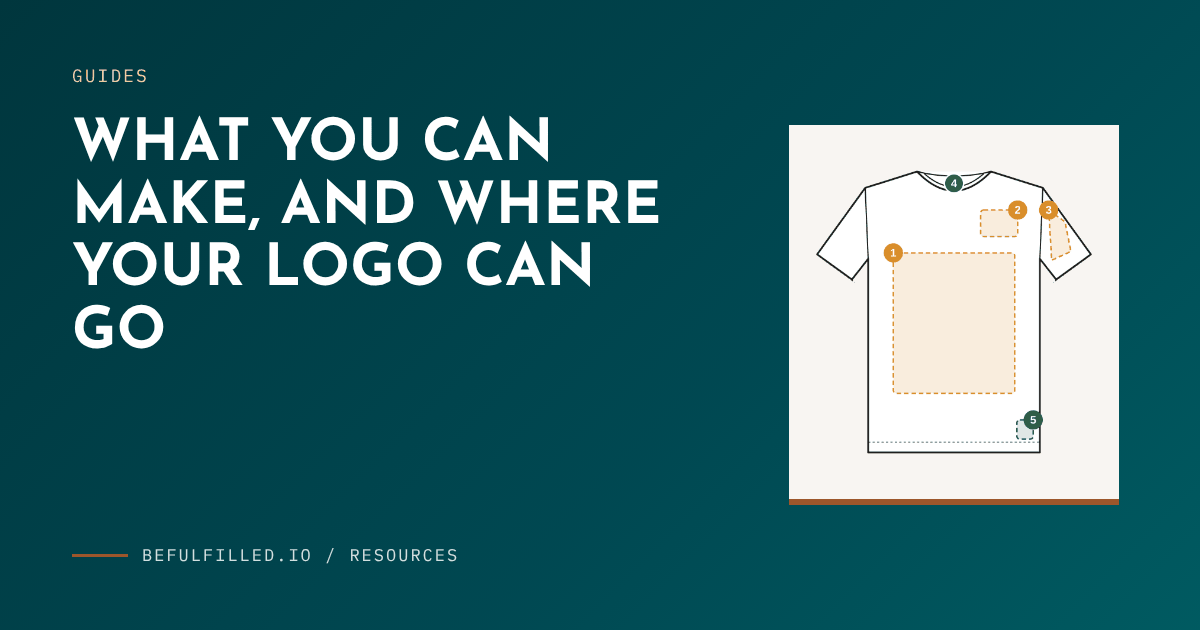
If you're new to making your own apparel, the hardest part is often knowing what's possible. This guide covers what we make, how it can be branded, and the steps from idea to finished product. Use it to decide what you want before you start your first Product Design Board. If you're still deciding what to make, start with where to find your product idea.
Four product families
Every piece can start from a premium blank or be fully custom cut-and-sew.
- Tees and tanks: short and long sleeve, boxy or fitted, tanks and muscle tees.
- Hoodies and crews: pullover hoodies and crewnecks, cropped or oversized.
- Zips and layers: full-zip hoodies, thermal zips and sleeveless hoodies.
- Bottoms and sets: sweatpants, joggers, shorts, and matching top and bottom sets.
Where your branding can go
Most people think of a logo on the chest. That's one spot of many. In the drawings below, orange areas are decoration zones for prints and embroidery, and green areas are for labels and trims. The numbers match the lists under each drawing.
T-shirt
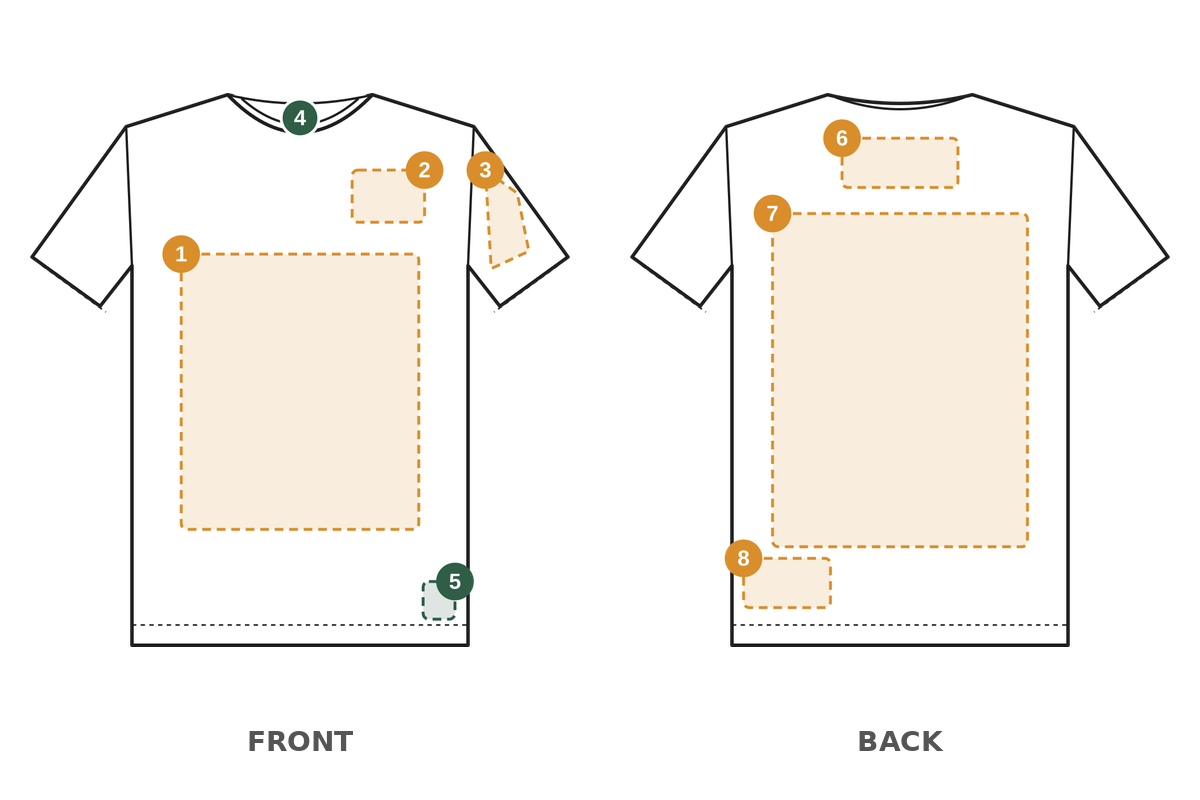
- Center chest or full front: screen print, puff print, direct-to-garment (DTG) print or appliqué.
- Left chest: embroidery, print or a woven patch.
- Sleeve: a sleeve hit or vertical sleeve text.
- Inside neck: a printed tagless label or a woven neck label.
- Hem flag: a woven tab in the side seam or hem.
- Back neck: a small logo, tagline or website.
- Full back: a large statement graphic.
- Lower back: a small secondary hit near the hem.
Hoodie
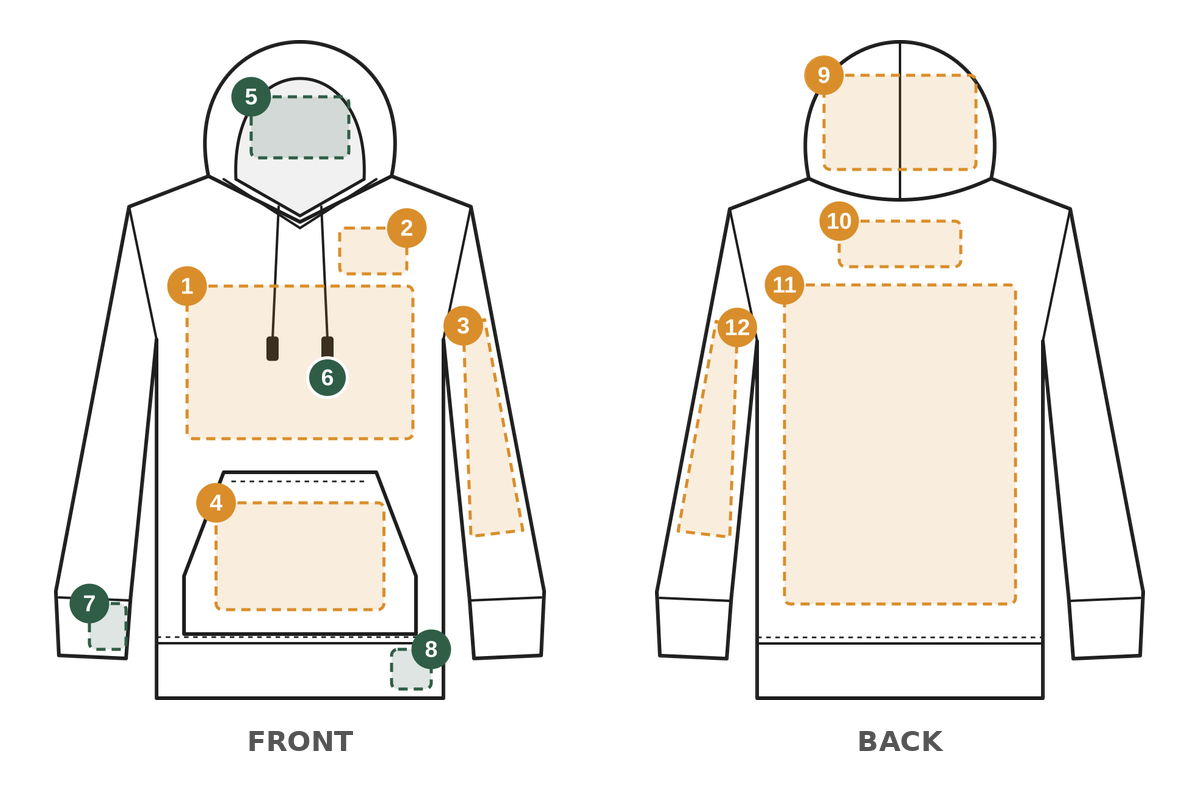
- Center chest: print, puff print or embroidery.
- Left chest: a small embroidered logo.
- Sleeve: down-sleeve text or a bicep hit.
- Pocket: a print or emboss on the pocket.
- Inside hood: a printed lining or contrast fabric.
- Drawcords: custom color and branded tips.
- Cuff: a small embroidered or woven tab.
- Hem: a woven flag label.
- Hood: print or embroidery on the outside of the hood.
- Back neck: a small logo or tagline.
- Full back: a large statement graphic.
- Back of sleeve: a secondary print or text.
Sweatpants and shorts
The front hip is the most common spot. You can also run a wordmark down the leg, add a back pocket or back hip hit, or brand the waistband and drawcord.
A good rule: pick one main graphic and one or two small details. A large back print with a small chest logo and a woven hem tab looks finished without feeling crowded.
Decoration techniques
You can mix techniques on one garment, such as a puff-print chest with an embroidered sleeve.
- Screen print: bold, durable color. Best value at volume.
- Puff print: raised 3D ink. Great for wordmarks.
- Embroidery: stitched thread. Premium and long-lasting.
- Chenille or appliqué: textured patches with a varsity feel.
- Emboss or deboss: tonal, no ink. Subtle and high-end.
- Rhinestones: heat-set crystals for statement pieces.
- All-over print: a pattern that runs edge to edge.
- Tonal small hits: a minimal logo for an everyday look.
Fabrics and weights
Fabric weight is measured in GSM, grams per square meter. Higher GSM feels heavier, warmer and more structured.
- Cotton jersey (190–350 GSM): tees and long sleeves, from light and drapey to boxy and premium.
- Rib or specialty jersey (around 220 GSM): tanks and fitted pieces with stretch.
- Fleece (300–350 GSM): brushed inside. Classic hoodies, crews and joggers.
- Heavyweight terry (400–550 GSM): streetwear weight for hoodies, sweats and shorts.
- Thermal or waffle (around 380 GSM): textured knit for zips and lounge pants.
- Interlock (340–400 GSM): smooth face that holds bright color well.
Colors, washes and finishes
The garment itself can carry your brand. Washes include ombré or dip-dye, sun-faded, tie-dye, cloud or mineral dye, vintage distressed and custom camo print. Garment dyeing lets us match pieces to your brand's Pantone colors.
You can also choose the cut (boxy, oversized or cropped), the hem (raw or ribbed), and contrast trims such as drawcords, ribbing and stitching in your brand colors.
Matching sets
One idea that works well: create a single signature pattern and run it across a hoodie, sweatpants and shorts. Repeat your logo in the same way on each piece, such as a chest wordmark on the top and a matching leg hit on the bottoms. Customers see a complete outfit and are more likely to buy the full set.
Finishing touches
Small details are what make a product feel like a brand. Each one is another place for your name.
- Neck labels: a woven label or a printed tagless neck print with your logo and size.
- Hem and side flags: a small woven tab on the hem, cuff or side seam.
- Hang tags: a branded card with your story, care instructions or a QR code.
- Drawcords and tips: custom cord colors and branded metal tips.
- Zipper pulls: custom-shaped or engraved pulls on zip hoodies.
- Packaging: branded poly bags, mailers, stickers and inserts.
From idea to finished product
- Pick your styles. Choose the pieces you want in your first drop.
- Choose fabric and color. Select the weight, fit, and color or wash for each piece.
- Place your art. Send your logos and artwork and we map them to the branding zones.
- Sample and approve. We produce samples so you can approve fit, color and print.
- Produce and fulfill. We run bulk production, then store, pack and ship your orders.
You don't need to have every answer before you start. Here's how a done-for-you launch works. Our product team reviews every Product Design Board and helps you decide what's realistic to make, which fabric fits your price, and where your minimums will land.
Start a free Product Design Board, or book a call with our team and we'll walk through it with you.
John Brown Founder & CEO, Be Fulfilled
Frequently asked questions
Where can I put my logo on a t-shirt?
There are eight common spots: center chest or full front, left chest, sleeve, inside neck, hem flag, back neck, full back and lower back.
Where can I put my logo on a hoodie?
There are twelve: center chest, left chest, sleeve, pocket, inside the hood, drawcords, cuff, hem, the hood, back neck, full back and the back of the sleeve.
What does GSM mean for fabric?
GSM is grams per square meter. Higher GSM fabric feels heavier, warmer and more structured. Tees usually run 190 to 350 GSM and heavyweight hoodies 400 to 550 GSM.
Can I use more than one decoration technique on a garment?
Yes. You can mix techniques on one piece, such as a puff-print chest with an embroidered sleeve.
Can you match my brand colors?
Yes. Garment dyeing lets us match pieces to your brand's Pantone colors.
What is the minimum order?
Minimums start at 300 units per color.